
Supplements, Peptides, and PEDs for Special Operations Selection: What Actually Works (and What Doesn’t)
Figuring out what nutrition and supplements actually work for military selection is one of the most frustrating parts of preparation.
There’s no shortage of people in this space selling powders, pills, and protocols — many backed by cherry-picked studies, anecdotes, or outright hype. It’s hard to separate what sounds scientific from what actually helps when training volume is high and the consequences of injury or poor recovery are real.
I’m not a medical professional. I am a coach. And in this article, I’ll share the exact supplements I’ve recommended to the athletes I’ve coached to and through selection.
This breakdown follows the same structure as my video and is organized into six parts. We’ll start with supplements for injury prevention, specifically shin splints and bone stress injuries. From there, I’ll cover supplements for sleep, muscle building, and endurance in separate sections.
As a bonus, at the end, I’ll also explain which popular supplements I don’t recommend at all — including my take on performance-enhancing drugs and peptides.
Supplements for Injury Prevention and Bone Health During Selection Prep
Let’s start with injury prevention — specifically shin splints and bone stress injuries.
Shin splints are one of the most common setbacks in selection prep. Almost everyone has felt that dull ache along the shin at some point. When ignored, that minor discomfort can turn into weeks or months out of training due to stress reactions or stress fractures.
Training volume is usually the primary driver of bone stress injuries. That said, nutrition plays a much larger role than most people realize, especially when volume ramps quickly or stays high for long periods.
Below are the four supplements I prioritize for reducing the risk of bone stress injuries.
Vitamin D
Vitamin D is foundational for bone health.
Its primary role is allowing your body to absorb calcium, which is the main mineral in bone. When vitamin D levels are low, calcium absorption drops. Over time, this can weaken bone structure and increase the risk of stress injuries, including shin splints and fractures.
Data suggests that over 40% of the U.S. population has insufficient vitamin D levels. The risk is even higher for individuals with darker skin, since melanin reduces vitamin D synthesis from sunlight.
Sun exposure is one option, but it’s not always realistic — especially during winter months or for people training indoors or early in the morning. Supplementation is often the most practical solution.
Ideally, vitamin D intake should be guided by bloodwork and a physician’s recommendation. That said, vitamin D is widely available over the counter, and aggressive dosing is rarely necessary. The NIH lists 4,000 IU per day as the tolerable upper intake level for long-term use. In practice, many athletes supplement in the 3,000–5,000 IU per day range to bring levels into the middle or upper portion of the reference range.
Calcium
Once vitamin D levels are adequate, calcium intake becomes the next limiting factor.
Vitamin D only helps if there is enough calcium available to maintain and reinforce bone. When calcium intake is low, bone becomes more brittle over time.
Most people know that dairy products like milk, yogurt, and cheese are good sources of calcium. Even so, roughly 44% of people do not meet the recommended daily intake.
For context, an eight-ounce serving of plain yogurt provides close to half of the recommended 1,000 mg per day. Adding milk, cheese, or whey protein throughout the day usually makes hitting this target manageable without excessive effort.
Magnesium
Magnesium is one of the most overlooked supplements for athletes, despite its importance.
Magnesium plays a dual role in bone health and recovery, and it’s also involved in sleep regulation, which we’ll cover later. One of its key functions is converting vitamin D into its active form. When magnesium levels are low, vitamin D remains largely unusable — even if intake is adequate.
Estimates suggest that up to half of adults are deficient in magnesium. For endurance athletes, the risk is even higher. Magnesium is lost through sweat, and long hours of running, rucking, or swimming increase daily losses.
Dietary intake can be estimated, but many athletes struggle to reach the NIH recommendation of 400 mg per day consistently. In practice, supplementing several hundred milligrams in the evening with food is often effective for both bone health and recovery.
Collagen Peptides + Vitamin C
Collagen supplementation was controversial for a long time. The main criticism was that once ingested, collagen is broken down into amino acids like any other protein, making it unclear whether it actually supported connective tissue.
More recent research has helped clarify this.
Studies now show that when collagen peptides are consumed with vitamin C before training, markers of collagen synthesis increase specifically in connective tissue. Vitamin C is required for collagen formation, and pairing it with collagen improves how effectively that collagen is synthesized and incorporated into tendons, ligaments, and bone.
This does not replace intelligent training decisions like managing volume, rotating impact modalities, or choosing softer surfaces when appropriate. But for athletes performing high-impact work consistently, taking 10–15 grams of collagen peptides with 50–100 mg of vitamin C before training may provide a meaningful benefit.
Injury Prevention Supplement Stack
To summarize, these are the supplements I prioritize for reducing the risk of shin splints and bone stress injuries during selection prep. This stack supports bone mineral status and connective tissue adaptation while training volume is high.
Injury Prevention Summary
| Supplement | Typical Intake | Primary Role | Notes |
|---|---|---|---|
| Vitamin D | Varies (often 3,000–5,000 IU/day used anecdotally); NIH upper limit 4,000 IU/day | Supports calcium absorption and bone strength | Best guided by bloodwork when possible |
| Calcium | ~1,000 mg/day | Provides raw material for bone maintenance | Easier to hit via dairy (yogurt, milk, cheese, whey) |
| Magnesium | ~400 mg/day | Activates vitamin D; supports bone and recovery | Athletes may be at higher risk due to sweat loss |
| Collagen + Vitamin C | 10–15 g collagen + 50–100 mg vitamin C (pre-training) | Supports connective tissue synthesis | Complements load management; doesn’t replace smart programming |
Supplements for Sleep and Recovery During Selection Prep
All of the injury-prevention work above only matters if you’re actually recovering.
You can have well-structured training and solid nutrition, but if sleep quality is poor, recovery lags, injury risk rises, and performance eventually drops. During Special Operations selection prep, sleep is one of the biggest levers you have for durability and long-term progress.
Below are the supplements I’ve found most useful for improving sleep quality and recovery in athletes training at high volumes.
Magnesium Glycinate
Magnesium shows up again here, but the form matters.
Magnesium glycinate has been shown in double-blind, placebo-controlled studies to improve sleep outcomes, including time to fall asleep, total sleep time, and overall sleep quality scores. From a recovery perspective, it also helps with muscle relaxation and calming the nervous system.
For athletes running, rucking, lifting, and sweating multiple hours per week, this combination of improved sleep quality and recovery makes magnesium glycinate one of the highest-return supplements available.
Zinc
Zinc also plays a role in sleep regulation. Higher serum zinc concentrations are associated with improved sleep duration, sleep quality, and faster sleep onset.
Zinc deficiency is less common than magnesium deficiency, but endurance athletes are at higher risk due to zinc loss through sweat. The recommended daily intake for adult males is 11 mg per day.
Rather than supplementing blindly, it’s worth tracking intake for a week. If you consistently fall short, supplementation may improve sleep quality and recovery.
Melatonin: When and How to Use It
Melatonin is different from the other supplements discussed here because it’s a hormone, not a nutrient.
It’s naturally produced in response to darkness and helps regulate your circadian rhythm — when you fall asleep and when you wake up. Research consistently shows melatonin can reduce sleep onset latency and increase total sleep time.
That said, I don’t recommend taking melatonin nightly.
While it doesn’t appear to shut down natural melatonin production, many people become reliant on it. I prefer using melatonin strategically — for example, when resetting a sleep schedule, adjusting to a new time zone, or during short periods of disrupted sleep.
Sleep Supplement Summary
| Supplement | Typical Intake | Primary Benefit | Notes |
|---|---|---|---|
| Magnesium Glycinate | 400–420 mg | Improves sleep quality and recovery | Best taken in the evening |
| Zinc | ~11 mg | Supports sleep regulation | Consider dietary intake first |
| Melatonin | As needed | Improves sleep onset and duration | Use strategically, not nightly |
Muscle Building Supplements for Selection Prep
When it comes to building muscle, most supplements don’t move the needle.
If you’re training hard, sleeping well, and eating enough, you’re already covering most of what matters. There are really only two supplements worth paying attention to for muscle growth during selection prep.
Protein Intake for Muscle Growth and Recovery
Protein is the foundation.
Most of the research suggests that around 0.8 grams of protein per pound of lean body mass is sufficient to maximize muscle growth. For many athletes, that ends up around 120–140 grams per day, depending on bodyweight and body composition.
Equally important is distribution. Spreading protein intake across the day — with meals spaced several hours apart — helps support muscle protein synthesis.
In practice, consistently hitting protein targets can be challenging, especially with early training sessions, long workdays, or limited meal prep time. This is where protein powder can be useful.
A single serving of whey protein typically provides 20–25 grams of protein, making it an easy way to fill gaps. Protein powder isn’t required, but it’s a convenient tool. The key is choosing a brand that digests well and doesn’t interfere with training — especially running.
Creatine Monohydrate for Strength and Lean Mass
Once protein intake, training, and sleep are in place, creatine monohydrate is the only supplement that consistently provides an additional benefit for strength and lean mass.
Creatine works by increasing intramuscular phosphocreatine stores, which improves the ability to produce force and recover between efforts. Over time, this leads to small but meaningful increases in strength and lean mass.
The standard dose is 5 grams per day. While creatine occurs naturally in foods like red meat and fish, reaching this dose through diet alone would require impractically large quantities.
The effects of creatine aren’t dramatic overnight. Instead, they compound. An extra rep here, slightly better recovery there — over weeks and months, that adds up to greater strength and muscle gains than training alone.
There’s growing interest in higher-dose creatine protocols for potential cognitive benefits under stress and sleep deprivation. That research is still emerging. For most athletes, starting with 5 grams per day and assessing tolerance is the right approach. If experimenting with higher doses, splitting the intake can help reduce gastrointestinal issues.
Muscle Building Supplement Summary
| Supplement | Typical Intake | Primary Benefit | Notes |
|---|---|---|---|
| Protein | ~0.8 g per lb of lean body mass | Supports muscle growth and recovery | Spread intake across the day |
| Creatine Monohydrate | 5 g per day | Increases strength and lean mass | Effects compound over time |
Endurance Supplements for Selection Performance
When it comes to endurance, the list of supplements that actually help is short.
Most products marketed for endurance don’t improve your aerobic base, raise VO₂ max, or magically make long efforts feel easy. The two supplements below are the only ones I consistently see provide meaningful benefit when used correctly.
Creatine and Its Role in Endurance Under Fatigue
Creatine shows up again here, but for a different reason.
While it’s commonly associated with muscle building, creatine’s primary benefit is improving short-burst, high-intensity output and recovery between efforts. That matters more for selection than most people realize.
Selection endurance is rarely steady-state. It’s repeated surges while already fatigued — climbing hills under a ruck, accelerating during runs, moving hard after long periods of work. Creatine improves phosphocreatine availability, which helps you reproduce effort more consistently over time.
There is one important caveat.
Creatine can cause intramuscular water retention, which may increase bodyweight by a few pounds. In a pure time-trial scenario, that added weight can slightly slow pace. But even if a timed run doesn’t improve, overall endurance capacity is often higher — the added weight can mask real fitness gains.
For selection prep, where endurance is tested under load and fatigue, that tradeoff is usually worth it.
Caffeine for Endurance and Perceived Effort
Caffeine is one of the most studied performance enhancers available.
It doesn’t raise VO₂ max or improve aerobic capacity directly. Instead, it reduces perceived effort and improves alertness, allowing you to sustain output longer at the same physiological cost.
In practical terms, caffeine helps you access more of the fitness you’ve already built.
Caffeine is most useful on long endurance days or harder efforts. I recommend using it earlier in the day, as it has a long half-life and can degrade sleep quality if taken too late — even if you feel like you “sleep fine.”Effective doses typically fall in the range of 0.7–1.4 mg per pound of bodyweight, taken about 45–60 minutes before training. You don’t need to push to the high end to see benefits.
Caffeine isn’t something I recommend using daily. It’s best treated as a tool when you need a boost, not a baseline habit.
Endurance Supplement Summary
| Supplement | Typical Intake | Primary Benefit | Notes |
|---|---|---|---|
| Creatine Monohydrate | 5 g per day | Improves repeat-effort endurance under fatigue | May increase bodyweight slightly |
| Caffeine | 0.7–1.4 mg/lb bodyweight | Reduces perceived effort and fatigue | Use earlier in the day |
Supplements I Do Not Recommend for Selection Prep
Before talking about PEDs or peptides, it’s worth clearing out a few supplements that come up constantly — and that I do not recommend for selection prep.
These aren’t harmful in most cases. They’re just ineffective if your training, nutrition, and recovery are already in order.
BCAAs
Branched-chain amino acids are one of the most overhyped supplements in fitness.
If your total daily protein intake is sufficient, BCAAs provide no additional benefit for muscle recovery or growth. Study after study has shown that when adequate protein is present, isolated BCAAs don’t meaningfully increase muscle protein synthesis.
If you’re already hitting your protein targets, BCAAs are redundant.
Turkesterone
Turkesterone gained popularity through influencer marketing and animal studies, not high-quality human data.
At this point, there is no solid evidence in humans showing meaningful improvements in strength, muscle growth, or performance. Most of the claims come from rodent studies or anecdotal reports.
Until strong human data exists, this is not something I recommend spending money on.
Glucosamine
Glucosamine is commonly marketed for joint health and injury prevention.
While it has been studied extensively — especially for osteoarthritis — large reviews and meta-analyses generally show no meaningful improvement in pain, stiffness, or function compared to placebo.
Because of that, I do not include glucosamine in the injury prevention or bone health stack.
Supplements I Avoid — Summary
| Supplement | Why I Don’t Recommend It |
|---|---|
| BCAAs | No added benefit if protein intake is adequate |
| Turkesterone | No strong human performance data |
| Glucosamine | No meaningful benefit vs placebo |
If there’s a supplement you’re curious about that isn’t listed here, that’s usually a sign it falls into one of two categories: either it hasn’t been studied well, or it doesn’t move the needle enough to matter for selection.
Next, we’ll address the topic people are usually most curious — and most confused — about: PEDs and peptides, what they actually do, and whether you need them at all.
Performance-Enhancing Drugs (PEDs) and Selection Prep: What You Need to Understand
This is the part everyone whispers about — and almost no one explains clearly.
PEDs come up in selection prep because candidates are training hard, under-recovering, and looking for an edge. Before getting emotional or moral about it, we need to talk honestly about what these drugs actually do and what problems they introduce.
Anabolic Steroids and Testosterone
The biggest misconception about anabolic steroids — including testosterone — is that they directly make you faster, tougher, or more durable.
That’s not how they work.
The primary performance benefit of anabolics is recovery.
Used properly, they allow someone to:
- Tolerate higher training volume
- Recover faster between sessions
- Accumulate more total work over time
That’s the real advantage. Not magic speed. Not instant endurance.
Yes, anabolics also increase muscle mass and strength — which is why bodybuilders use them — but selection does not reward maximal size. Excess muscle, water retention, elevated blood pressure, and poor aerobic efficiency often hurt performance under rucks and long events.
In other words, more muscle is not automatically better for selection.
Why Testosterone Deserves Its Own Mention
Testosterone is increasingly common in civilian medicine, which creates confusion.
Here’s the reality right now:
- Testosterone is a Schedule III controlled substance
- Prescriptions are logged in state databases
- It can surface during medical screening at MEPS
- Non-prescribed use is illegal
When you enlist or commission, you complete the SF-86 security clearance questionnaire. It explicitly asks about illegal drug use in the previous seven years — including anabolic steroids.
Lying on the SF-86 is a felony.
Do people lie and get away with it? Sure. It happens.
The real question is whether you want to carry that risk — for something you likely don’t need in the first place.
PED Testing and Why the Rules Can Change Overnight
In 2022, a Navy SEAL candidate died shortly after Hell Week. Following that incident, illegal substances were found in his vehicle. The story went national.
In response, the Navy began testing BUD/S candidates for PEDs. A significant number of candidates were dropped. Shortly after, both the Navy and Army announced PED testing initiatives.
Is that same level of testing happening everywhere today? No.
But enforcement doesn’t need to be consistent to be dangerous. When leadership decides something is a problem — or when another high-profile incident occurs — policy and enforcement can change immediately.
If you’re breaking the rules, you’re the one exposed when that happens.
The Performance Reality
Here’s the uncomfortable truth:
If your training, nutrition, and recovery are already dialed in, you can pass selection without PEDs.
If you think drugs are the only way you can make it through, that’s usually a signal that something foundational hasn’t been maximized yet — volume management, fueling, sleep, durability, or patience.
PEDs are powerful tools. They’re also unnecessary for most candidates — and they introduce legal, medical, and career risks that last far longer than selection itself.
Peptides and Selection Prep: Injury Repair vs Performance Myths
Peptides get lumped into the PED conversation, but they’re a very different category — and they’re often misunderstood.
Most of the interest around peptides in the selection world comes from one place: injury management. Guys are running, rucking, lifting, and sleeping poorly. Things start to ache. Something flares up. And the fear is falling behind or getting pulled from training.
So let’s separate reality from hype.
BPC-157 and TB-500
The two peptides that come up most often are BPC-157 and TB-500.
There are no large, randomized human trials on these compounds. That matters. But based on animal data, case reports, and real-world use, there does seem to be a consistent pattern:
These peptides may help accelerate healing after damage has already occurred.
That includes things like:
- Tendon irritation
- Muscle strains
- Connective tissue injuries
What they do not do is just as important.
They do not:
- Make you faster
- Improve endurance
- Increase aerobic capacity
- Provide a direct selection advantage
They’re reactive tools, not performance enhancers.
If you’re undertrained, under-recovered, or poorly fueled, peptides won’t fix that. They don’t replace smart volume management, sleep, nutrition, or patience.
The Legal and Sourcing Issues
Peptides exist in a legal gray area, and that gray area can change quickly.
Quality matters more than most people realize. Contamination with heavy metals, solvents, or incorrect dosing is a real risk when sourcing peptides improperly.
If someone chooses to use peptides, the only responsible path is through a licensed physician and legitimate compounding pharmacy. Anything else introduces unnecessary risk — medically and professionally.
Growth Hormone and Secretagogues
Another category that gets a lot of attention is growth hormone secretagogues.
These compounds increase the amount of growth hormone your body already produces. They do not inject growth hormone directly.
Potential benefits include:
- Improved sleep quality
- Better recovery under high training stress
- Slight improvements in tissue repair
What they don’t do is directly improve performance.
They won’t raise VO₂ max.
They won’t make you faster.
They won’t suddenly make selection feel easier.
And here’s an important point most people miss:
Many younger athletes already have IGF-1 levels near the top of the reference range. In those cases, secretagogues tend to “tap out” early — meaning there’s very little upside.
At best, they offer subtle recovery benefits — nowhere near as impactful as improving sleep, eating enough, or managing training stress properly.
The Appetite and Bodyweight for GH Secretagogues
One downside that almost no one talks about:
Some peptides and GH-related compounds increase appetite.
That sounds harmless until you’re training for selection.
Extra appetite often means:
- Unintended weight gain
- Higher bodyweight under a ruck
- Slower run times
- More joint stress
In many cases, athletes end up fatter and slower because they’re overeating.
Bottom Line on Peptides
Peptides can have a place after an injury occurs, when the goal is returning to training sooner.
They are not:
- A shortcut
- A performance multiplier
- A replacement for fundamentals
For most candidates, optimizing training structure, recovery, nutrition, and sleep will do far more than any peptide protocol ever will.
PEDs, Selection, and the Risk Most Candidates Don’t Think Through
Before talking about whether anabolic steroids work, it’s important to talk about what they actually do, and the risks that come with them in a selection environment.
Anabolic Steroids and Testosterone
The biggest misconception about anabolic steroids — including testosterone — is that they automatically make you faster, more enduring, or better at selection events.
That’s not how they work.
The primary benefit of anabolics is recovery. Used properly, they allow someone to tolerate more training volume, recover faster between sessions, and accumulate more total work over time. That’s the advantage.
Yes, they also increase strength and muscle mass. But excess muscle, water retention, and elevated blood pressure often hurt endurance, especially in long events, heat, and under load.
Selection doesn’t reward bodybuilding. It rewards repeatable output under fatigue.
Now, testosterone specifically deserves extra attention.
Even though TRT is increasingly common in civilian medicine, testosterone is still a Schedule III controlled substance. Prescriptions are logged in state databases and can surface during medical screening at MEPS.
And that brings us to something many candidates overlook.
The SF-86 and Long-Term Consequences
When you enlist or commission, you complete the SF-86 security clearance questionnaire. You do it again every five years.
It explicitly asks about illegal drug use in the previous seven years, including anabolic steroids or controlled substances used without a valid prescription.
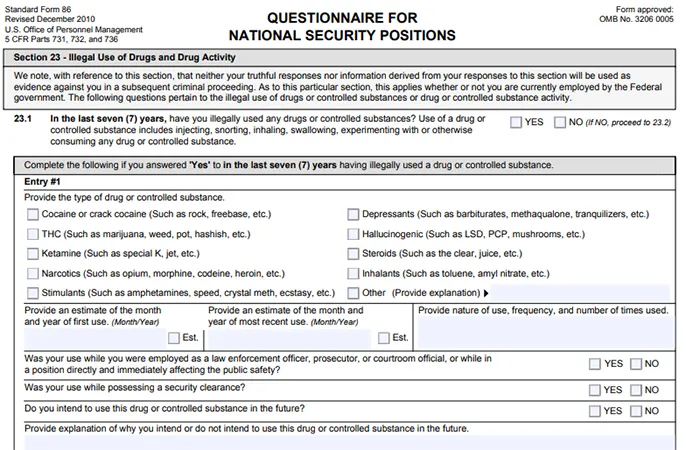
Providing false information on the SF-86 is a felony.
Do people lie and get away with it? Sure. It happens.
The real question is whether you want to carry that risk — for your entire career — for something you likely don’t need.
Here’s the other problem. Enforcement policies can change. When leadership decides there’s a problem, testing and scrutiny can change overnight. Candidates have been dropped before (like in the BUD/S scandal), and it can happen again.
The PED Question That Actually Matters
Here’s the question every serious candidate should ask themselves:
In your best physical condition — training intelligently, eating enough, and sleeping well — are you capable of passing selection without banned substances?
If the answer is yes, then the legal, medical, and career risks don’t make sense.
And if the answer is no, it’s worth asking whether you’ve ever truly committed 100% to:
- Structured training
- Adequate nutrition
- Consistent sleep
- Patience over months (not weeks)
Because most people haven’t.
And many are surprised by what they’re capable of when they finally do.
Final Takeaway
Over-the-counter supplements can make small but meaningful improvements.
Peptides may help injury repair after damage occurs.
Anabolics are the most potent — and the most unnecessary for most candidates.
The biggest levers are still the boring ones:
- Training quality and sequencing
- Appropriate volume and intensity
- Nutrition that supports recovery
- Sleep
- Patience
There is no shortcut to getting selected.
Best of luck with your training, and I hope you found this helpful!
